
To practice self-hypnosis at home, find a quiet space, relax your body with slow breathing, focus your attention on a single point or phrase, then repeat a positive suggestion tied to your goal. Most beginners see results with 10 to 15 minutes of daily practice over two to three weeks.
It’s midnight, your body is exhausted, but your mind keeps replaying tomorrow’s to-do list on a loop.
If that sounds familiar, learning how to practice self-hypnosis at home might be the quiet skill you have been missing. It costs nothing, needs no special equipment, and you can do it tonight in your own bed.
Across Perth, more people are reaching for mind-body techniques like this to ease stress, sleep better, and finally shift habits that willpower alone never could.
In this beginner’s guide, you will learn exactly what self-hypnosis is, how to run a full session step by step, and how to tell when a professional can help.
What Is Self-Hypnosis, Really?
Self-hypnosis is a focused state of relaxed attention you guide yourself into, where your mind becomes more open to positive suggestion.
You stay awake the whole time. You hear the room around you, you know exactly where you are, and you can open your eyes and stop whenever you choose.
The version you have seen on stage, where someone clucks like a chicken on command, has given the whole practice a strange reputation.
Real self-hypnosis feels far more ordinary than that. Think about the last time you drove a familiar route home and arrived with no memory of the turns you took, your hands steering while your thoughts wandered somewhere else entirely.
Or the way a good book pulls you in so completely that you stop hearing the television. That absorbed, softly focused state is the doorway you are learning to walk through on purpose.
You hold the keys the entire time, which is why the worry about losing control fades once you have tried it even once.
Is Self-Hypnosis the Same as Meditation?
They share the same calm foundation, relaxed body and quiet focus, yet they point that focus in different directions.
Meditation trains you to watch your thoughts drift past without grabbing them. Self-hypnosis takes that same settled mind and aims it at one outcome you have chosen, like sleeping through the night or staying steady before a presentation.
Here is how the two compare at a glance:
| Meditation | Self-Hypnosis | |
| Main purpose | Awareness and acceptance | A specific goal or change |
| What you do with thoughts | Observe them and let them pass | Direct the mind toward one suggestion |
| Typical outcome | A general sense of calm over time | A targeted shift, like better sleep or more confidence |
| How long it takes to feel useful | Builds gradually with regular practice | Often noticeable within a few focused sessions |
| Best for | Daily stress and emotional balance | Habits, sleep, anxiety, and confidence goals |
A simple way to picture the difference: in meditation, you sit on the riverbank and watch the water go by. In self-hypnosis, you step in and steer toward a particular spot on the far shore.
Many people who already meditate find self-hypnosis clicks quickly, since the hardest part, settling the body and quieting the noise, already feels like home.
Does Self-Hypnosis Actually Work?
Yes, with a caveat: the evidence supports hypnosis for several specific goals, and how well it works depends on consistency and how readily you respond to suggestion. Clinical research points to benefits across:
- Anxiety
- Sleep quality
- Pain management
- Habit change, including weight and smoking
The strongest signal comes from a 2019 meta-analysis published in the International Journal of Clinical and Experimental Hypnosis, which pooled 17 trials and found that the average person receiving hypnosis reduced their anxiety more than about 79% of people who got no treatment.
At the longest follow-up, that figure climbed to 84%, and hypnosis worked best when paired with another psychological therapy rather than used alone.
That last detail matters for anyone weighing solo practice against professional support, a question this guide returns to further down.
The need is real close to home. A Sleep Health Foundation report estimated that 39.8% of Australian adults experience some form of inadequate sleep, and rumination, the exact midnight mind-spin described at the start, is one of the most commonly reported culprits among younger adults.
For the many Perth residents lying awake with a busy head, a technique that quiets mental chatter has obvious appeal.
Suggestibility explains why two people can follow the same script and walk away with different results.
Roughly one in seven adults responds very strongly to hypnotic suggestion, most sit somewhere in the middle, and a small group barely responds at all.
You will get a feel for where you land within your first few sessions, which is exactly what the next part walks you through.
How to Hypnotise Yourself at Home: A Step-by-Step Method

Six steps take you through a full session. Read them once, then run through from memory so you are not glancing at your phone halfway.
Short and frequent wins here: ten to fifteen minutes a day will move you further than one long session squeezed in on a Sunday, because the repetition is what trains your mind to drop into the state on cue.
Step 1: Choose One Goal and Write Your Suggestion
Pick a single focus for the session. Sleep, calmer nerves before a meeting, more confidence walking into a room.
Now turn it into one short, present-tense line phrased around what you want. “Each breath out, my shoulders soften and my mind slows” works far better than “I won’t feel stressed,” because your mind locks onto the picture you give it, and “stressed” is still a picture of stress. Keep it to a sentence you can remember with your eyes closed.
Step 2: Set Up a Quiet, Comfortable Space
Find somewhere you will not be interrupted for the next quarter of an hour. Silence your phone or switch it to airplane mode.
Sit in a supportive chair or lie down, loosen anything tight, and let your hands rest. Dim the lights if you can. The aim is a spot your body reads as safe, so it stops bracing and starts to settle.
Step 3: Relax Your Body
Close your eyes and take slow breaths, a little longer on each exhale. Then travel through your body from your forehead down to your feet, softening each area as you pass it: jaw, shoulders, chest, hands, legs.
If sensing the muscles feels vague, tense each one for a few seconds and release, letting the contrast show you what “let go” feels like.
Spend a minute or two here until your breathing turns easy and even.
Step 4: Deepen Your Focus
Now guide your attention inward. Count slowly down from ten to one, telling yourself you drift a little deeper with each number.
If counting feels flat, fix your gaze on a single point on the ceiling or wall and let your eyelids grow heavy until they close on their own.
Either path narrows your focus and quiets the background chatter, which is the doorway described earlier in this guide.
Step 5: Repeat Your Suggestion With Imagery
In this settled state, bring back the line you wrote in step one. Say it slowly in your mind, three or four times, and wrap it in a vivid scene. For the stress example, picture your shoulders physically dropping, your face unclenching, a warm heaviness spreading down your arms. The richer the picture, the more your mind treats it as real and starts to lean toward it.
Step 6: Count Yourself Back Up
When you are ready, count from one to five, telling yourself you return more alert with each number.
At five, open your eyes feeling calm and clear. If you are doing this for sleep, skip the count-up entirely and let yourself drift off from step five.
A Simple Script You Can Try Tonight
Record this on your phone in a slow, soft voice, or learn it by heart and run it silently. Pause wherever you see three dots.
“I’m settling in now, letting my body grow heavy and warm… With each breath out, I sink a little deeper, calm and safe… My shoulders soften, my jaw loosens, my mind begins to slow… I’m counting down from five… five, drifting deeper… four, quieter still… three, my thoughts going soft… two, almost there… one, deeply relaxed… Here, I let this thought settle: each breath out, my shoulders soften and my mind slows… I rest in that for a moment, picturing it, feeling it… When I’m ready, I’ll come back up gently, calm and clear.”
Run through it once tonight and notice how your body feels afterward. The next section covers the slips that trip most beginners up, so a flat first attempt does not send you quitting on day three.
Common Beginner Mistakes to Avoid
A few predictable slip-ups account for most early frustration. Knowing them upfront means you can spot yourself doing them and adjust on the spot.
- Trying too hard to “feel hypnotised.” There is no dramatic switch that flips. The state feels like ordinary, pleasant relaxation, and straining to reach something more theatrical only tenses you up and pulls you out of it. Let it be underwhelming.
- Phrasing suggestions in the negative. “I won’t stress” plants the word your mind then chews on. Aim every suggestion at the result you want: “I feel calm,” “I sleep easily,” “I speak with confidence.”
- Practising when you are wiped out. Run a session at midnight after a brutal day and you will either crash straight to sleep or fidget through it half-resentful. Pick a window when you are tired enough to relax and awake enough to focus, unless sleep is the actual goal.
- Quitting after three days. The first sessions often feel clumsy while your mind learns the route. Most people notice a real shift somewhere in the second or third week of daily practice, so give it that long before you judge whether it works for you.
Using Self-Hypnosis for Anxiety, Sleep, and Confidence

The same six steps flex to fit whatever you are working on. What changes is the suggestion you choose and one small tweak to how you run the session.
For anxiety
When your chest tightens and your thoughts start racing ahead, a settling line gives your mind somewhere steady to land.
Try “With each breath, my body grows calm and my thoughts slow down.” The tweak: practise this one in the morning before the day’s pressure builds, so the calm is already in your system when a stressful moment hits, rather than scrambling for it mid-spiral. Even a five-minute version on a tense afternoon can take the edge off.
For sleep
This is where self-hypnosis earns its keep for a lot of people, especially the FIFO workers across Perth whose body clocks never quite settle, and anyone whose mind switches on the second their head hits the pillow.
Run the full session lying in bed with the lights out, using a suggestion like “I am safe, I am heavy, and sleep comes to me easily.” The tweak: skip step six completely.
Let yourself drift down through the count and out, no waking back up. If you surface again later in the night, start the count-down quietly from the top.
For confidence
Walking into an interview, a presentation, or a room full of strangers gets easier when you have rehearsed the feeling in advance.
Pick a suggestion like “I am calm, capable, and at ease as I speak.”
The tweak: during step five, picture the exact situation in detail, see yourself steady and clear in it, so your mind treats the real moment as familiar ground it has already walked. Run it the night before and again an hour before you are up.
For the many people juggling long commutes and demanding shifts, ten quiet minutes aimed at the right goal is a rare bit of control over a nervous system that spends most of the day in high gear.
Some goals, though, respond faster with a trained guide, which is worth knowing before you spend months troubleshooting alone.
When Self-Hypnosis Isn’t Enough: Signs You’d Benefit From a Hypnotherapist
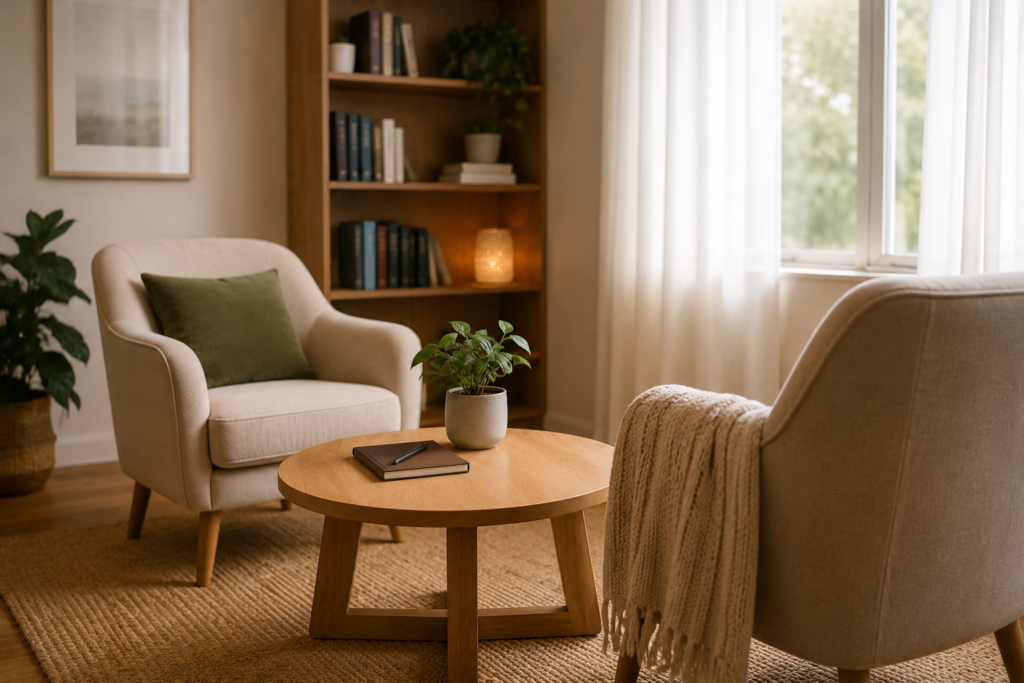
Self-hypnosis is a brilliant daily habit, and for plenty of goals it is all you will ever need. Some patterns, though, sit deeper than a home practice can reach on its own, and chasing them solo for months can leave you stuck when a few guided sessions would have moved you forward.
Here are the signs it is worth bringing in a professional:
- Anxiety that has been with you for years, rather than the ordinary nerves a calming routine handles.
- Patterns tied to a past experience or trauma, where strong feelings surface and need careful, trained support.
- Deep-rooted habits like smoking, where the behaviour is wired into daily routines and emotions.
- Not knowing what suggestion to use, or trying for weeks with nothing shifting.
Clinical hypnotherapy is guided hypnosis delivered by a trained, qualified practitioner working with you toward a specific therapeutic goal.
A practitioner reads how you respond in real time, adjusts the approach on the spot, and takes you into deeper, more focused work than most people reach alone, while keeping the whole process safe and tailored to your history.
In Perth, Amanda Wright at HypnoGenie offers exactly this kind of support. She works one-on-one with clients on anxiety, sleep, confidence, and habit change, and she offers a free discovery call so you can talk through what you are dealing with and see whether it is the right fit, with no commitment to book anything further.
What Happens in a Clinical Hypnotherapy Session in Perth?
A typical session follows a clear shape:
- A conversation about your goals and what has been going on for you.
- Guided relaxation into a focused, comfortable state.
- Tailored suggestions chosen for your situation.
- A plan for home practice so the work continues between visits.
What sets professional sessions apart is the personalisation. Your hypnotherapist writes suggestions around your exact wording and triggers, guides you into deeper trance work than solo practice usually allows, and holds you accountable week to week, which is often the difference that turns a stubborn goal into a solved one.
That structured support is what makes booking a session worth considering when home practice has taken you as far as it can.
Conclusion
Learning how to practice self-hypnosis at home hands you a free, natural tool for calmer days, better sleep, and steadier confidence, available any night you choose to use it.
Two things carry you from curious beginner to genuine results: consistency over perfection, since ten focused minutes a day beats a rare long session, and positive phrasing, aiming every suggestion at the outcome you want. Some goals move faster with a trained guide beside you.
If yours is one of them, book a free discovery call with Amanda Wright at HypnoGenie and find out how clinical hypnotherapy can fast-track what you are working toward.
Frequently Asked Questions
No. You stay aware and in control throughout, and any interruption brings you straight back. If you stopped guiding yourself, you would either drift into normal sleep or open your eyes feeling alert within a minute.
Yes for most healthy adults. If you live with psychosis, schizophrenia, severe PTSD, or dissociation, check with a GP or hypnotherapist first, since guided support is safer. For everyday stress, sleep, and confidence, it carries no real risk.
You are likely too tired or too comfortable. Sit upright in a chair rather than lying down, and practise earlier in the day. A cooler room and firmer seat help your mind stay focused.
Most Australian hypnotherapists charge $100 to $250 per session, with the first appointment usually longer and dearer. Medicare does not cover it, though some private funds offer small Extras rebates. Check with your fund and ask about a free discovery call.
Yes. Older kids and teens can use simple self-hypnosis for sleep, exam nerves, or sports confidence, and often learn it fast. Keep sessions short and the wording easy. For anxiety, see a hypnotherapist experienced with young people first.
Apps help while you are still learning the steps. The catch is their generic scripts. Once comfortable, recording your own suggestions in your own voice usually lands deeper, since the wording fits your exact goal.
Occasionally, usually from straining to relax or phrasing suggestions around the fear itself. Shorten the session and switch to gentle, outcome-focused wording. If anxiety keeps spiking, stop and speak with a hypnotherapist.