
Good sleep hygiene starts with a consistent wake-up time, morning daylight, less caffeine, a calm screen-free wind-down, and a cool, dark bedroom. If stress or racing thoughts still disrupt sleep, hypnotherapy may help by promoting relaxation and easing unhelpful thought patterns.
You lie awake in the small hours, eyes shut, mind wide open, running through tomorrow’s list for the fourth time.
You have read the sleep hygiene tips, you keep your room dark, you put the phone away, and still sleep will not come. If that sounds familiar, you are in good company.
Broken, restless sleep is one of the most common health complaints in Australian households, and doing everything “right” does not always fix it.
This article walks you through the sleep hygiene habits that genuinely hold up, then takes an honest look at what hypnotherapy can add when those basics are not enough.
What “Sleep Hygiene” Really Means
Sleep hygiene is the set of everyday habits and conditions that make consistent, quality sleep more likely.
It is less about one clever trick and more about the full picture of what you do in the hours before bed, the room you sleep in, and the timing you keep from one day to the next. Behaviour covers things like screen use and caffeine.
Environment covers light, noise, and temperature. Timing covers when you wind down and when you wake. Get these working together and you tilt the odds in your favour night after night.
Good habits raise your chances of sleeping well, but they do not always override what sits underneath, such as stress, a busy mind, or a deeper sleep problem.
Sleep Hygiene Tips That Hold Up

The sleep hygiene tips that actually move the needle are simple to name and harder to keep.
Wake at the same time every day, wind down for an hour before bed without screens, get daylight in the morning, cut caffeine after early afternoon, and keep your room cool, dark, and quiet.
None of these is a magic fix. Together they build the conditions your body needs to fall asleep and stay asleep.
Keep Your Wake-Up Time Steady
If you change one thing, make it this. A fixed wake-up time anchors your body clock far more reliably than a fixed bedtime, because morning light and a consistent rise are what set your internal timing for the day ahead.
That means holding the line on weekends too, even after a rough night. Sleeping in to catch up feels reasonable, but it shifts your clock and makes the next night harder.
Steady beats generous when it comes to when you get up.
Give Yourself a Real Wind-Down
Your body does not switch from a full day to sleep on command. It needs a runway. Spend the hour before bed dimming the lights, stepping away from screens, and doing the same few calming things each night, whether that is reading, a warm shower, or slow breathing.
A repeatable bedtime routine for better sleep tells your brain what is coming and starts the shift toward rest. Screens are the habit most worth breaking here.
Late-night phone and device use is among the most commonly reported sleep disruptors for Australian adults, according to the Sleep Health Foundation’s national survey work.
The light and the mental stimulation both work against you at the worst possible time.
Sort Out Caffeine, Light, and Your Bedroom
A few practical settings do most of the heavy lifting:
- Caffeine: It lingers longer than people expect, so give yourself a cut-off in the early afternoon and let it clear before bed.
- Morning light: Get natural daylight into your eyes soon after waking. It sharpens the wake signal and helps you feel sleepy at the right hour later.
- Your bedroom: Set it up cool, dark, and quiet. A room that fights you on temperature or light quietly undoes a lot of good habits, so it is worth getting right.
Why Can’t You Sleep Even When You’re Exhausted?
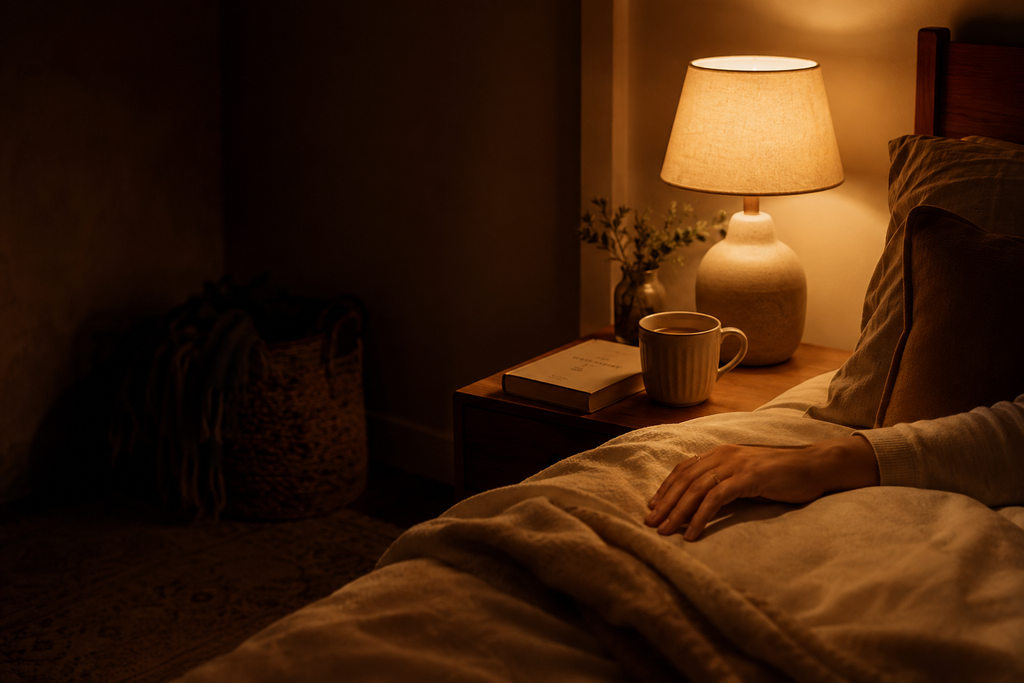
Being tired but wired usually points to an activated nervous system rather than a lack of tiredness.
When stress hormones are up and your mind is racing, your body stays in alert mode even though you are worn out.
That is why lying there longer rarely works. You are not short on fatigue, you are short on the calm that lets sleep take over.
The usual culprits are cognitive arousal and rumination, the mental churn of replaying the day or bracing for tomorrow.
A busy, worried mind keeps the body switched on, and these are among the factors Australian adults most often report as the reason they cannot drift off, according to the Sleep Health Foundation’s Australian Sleep Report.
This is where relaxation techniques for sleep earn their place, from slow breathing to a body scan that coaxes your system out of high gear.
It is also where sleep hygiene starts to show its limits. You can dim every light and still lose to your own thoughts, which is exactly the kind of sleep problem good habits alone do not always solve.
When Good Sleep Hygiene Isn’t Enough
Sleep hygiene is the right place to start, and for a lot of people it quietly fixes the problem. Steady habits smooth out many restless nights on their own.
But if you have been doing the basics for weeks and still struggle to fall asleep, or you keep waking through the night, that can be a sign of something habits alone will not settle.
You would be far from alone. Across Australia, a large share of adults live with at least one ongoing sleep symptom, and close to 15 percent meet the mark for clinical insomnia, according to Sleep Health Foundation research on chronic insomnia.
Numbers like these are worth knowing for one reason. Persistent sleep trouble is common, it is not a personal failing, and it often responds to the right kind of support rather than more willpower.
So how do you know when to look beyond sleep hygiene? A few honest signals: the trouble has lasted a month or more, it is wearing on your mood or your days, or no amount of tweaking your routine seems to shift it.
If that is where you are, it may be time to reach for insomnia support and talk to someone who works with sleep. Getting help early tends to make things easier, not harder.
What Hypnotherapy Adds for Sleep

Hypnotherapy for sleep works on the part of the problem that habits leave untouched, the mental and emotional patterns that keep your mind switched on at night.
In a typical session you settle into a deeply relaxed, focused state, and from there a practitioner uses gentle suggestion to ease the stress and habitual thinking that stand between you and rest.
It reaches the deeper layer a checklist of good habits cannot.
In practice, sleep hypnotherapy tends to involve:
- Guided relaxation that calms an overactive nervous system and teaches your body what letting go actually feels like.
- Focused suggestion aimed at the worry loops and racing thoughts that keep you awake, helping to loosen their grip over time.
- Reshaping habitual thinking around sleep, so bedtime stops feeling like a nightly battle you brace for.
On the evidence, it helps to be straight with you. A 2023 systematic review found that just under half of the studies reported positive effects on sleep, with the research still limited by small sample sizes and mixed quality.
The honest read is that hypnotherapy looks promising and low-risk for many people, and it is not a guaranteed fix.
For anyone drawn to natural sleep support and a drug-free path, that profile makes it worth considering as part of a wider approach.
If you are in Perth and want to explore it with someone, HypnoGenie offers sleep hypnotherapy in Australia with Amanda Wright, who works with clients on the stress and thought patterns behind restless nights.
It gives you a supportive place to start when the basics have taken you as far as they can.
Does Hypnotherapy Actually Work for Sleep?
Research suggests hypnotherapy can help some people sleep better by easing stress and quietening a busy mind.
Results vary from one person to the next, and it works best alongside solid sleep habits rather than in place of them. Think of it as support for the mental side of sleep, not a cure.
It tends to suit people whose nights are ruled by racing thoughts, worry, or tension they cannot switch off, especially when good habits alone have not been enough.
A first session usually starts with a conversation about your sleep and what sits behind it, followed by guided relaxation so you get a feel for the process.
A short consultation is the easiest way to find out whether it fits your situation before you commit to anything.
Conclusion
Consistent sleep hygiene tips settle a lot of restless nights, and when a racing mind or long-running insomnia stays put, hypnotherapy can work on the layer underneath.
Better sleep is usually built from small, steady changes rather than one big fix, so start where you can.
If you want to talk it through, book a free 20-minute telephone consultation with Amanda Wright at HypnoGenie to explore your sleep and see whether hypnotherapy fits.
Frequently Asked Questions
It varies, though many people notice a shift within a few sessions. Hypnotherapists often work in short, focused blocks rather than open-ended courses, so ask about a likely plan upfront.
Medicare generally does not, unless a registered psychologist delivers it under a mental health care plan with a GP referral. Some private funds offer small extras rebates, so check your policy directly.
Yes, hypnotherapy can run alongside medication and does not replace it. Never change or stop a prescription without talking to your GP first, even if your sleep improves.
If you are still awake after roughly 20 minutes, get up, keep the lights low, and do something calming until you feel sleepy. Lying there frustrated trains your brain to stay alert.
Short naps are usually fine, but long or late-afternoon ones borrow from your night. Keep naps under 30 minutes and before mid-afternoon if falling asleep is already a struggle.
Not really. Alcohol can help you drift off, then it fragments and lightens your sleep later in the night, so you wake less rested even after a full night in bed.
Most people can, since hypnosis is a focused, relaxed state rather than a loss of control. You stay aware the whole time, and the hypnotherapist guides you rather than taking over.